
The Canadian men’s flag football team secured their spot at the Los Angeles 2028 Olympic Games by winning the bronze medal at the IFAF World Flag Football Championships on Sunday.
In a thrilling match, head coach Paul LaPolice’s team defeated Mexico in overtime by a score of 34-26. After a touchdown and the successful two-point conversion on Canada’s first offensive possession in overtime, Guillaume Béland grabbed an interception to seal the outcome and ensure Team Canada’s qualification for LA 2028.
READ: Canadian women’s flag football team are world champions, qualify for LA 2028
In the victory, receiver Antony Auclair stood out, recording 149 yards on 12 catches with two touchdowns, including the game-winner in overtime.
The men’s team finished the group stage with a 2-1 record, including an impressive 26-6 victory over Austria, the world’s second-ranked team. In their final preliminary match, they lost to Japan, with the result costing them the top spot in the group and putting them on a slightly more difficult path to the final. In the quarterfinals, Canada defeated American Samoa 24-14 before falling to Italy 41-36 in the semifinals.
READ: Both Canadian teams advance to quarterfinals at flag football world championships
The United States, already guaranteed a spot in the upcoming Olympics as the host nation, reached the final, meaning Canada could still secure an Olympic quota spot by winning the bronze medal, a feat they accomplished brilliantly.
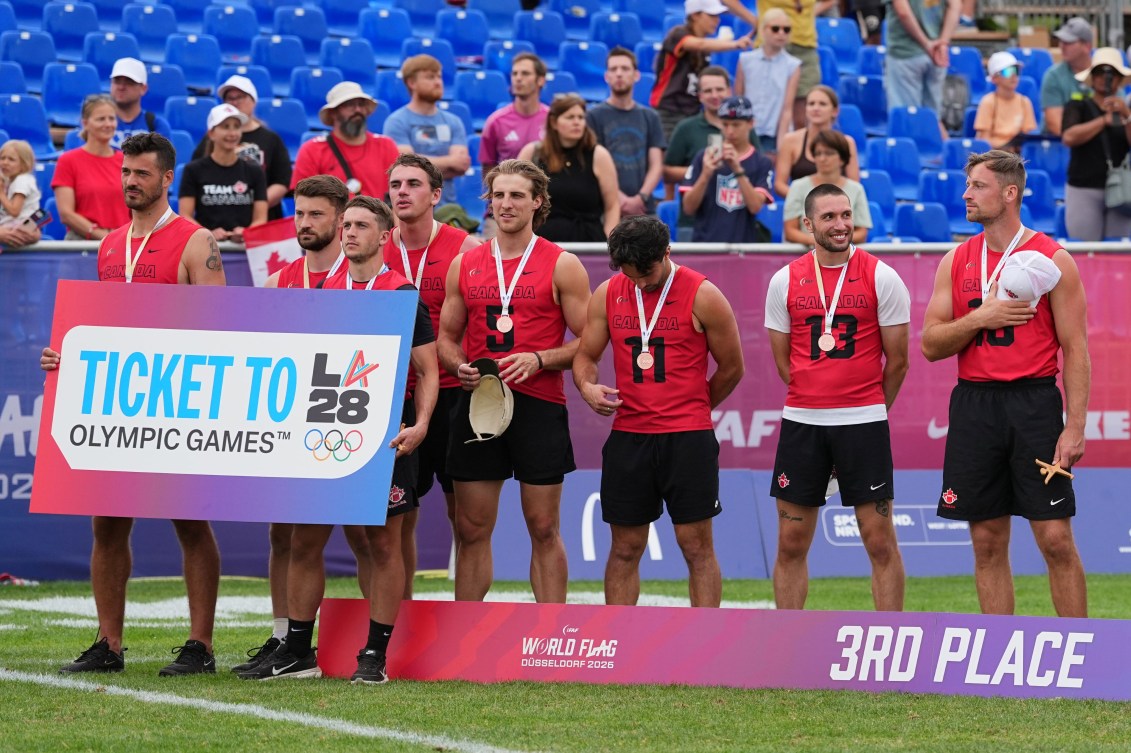
The world championships represented the first opportunity for countries to earn Olympic quota spots in flag football. The two best eligible teams of each gender at qualified for LA 2028. The United States had already secured its place in both Olympic tournaments as the host country. By winning the silver medal, Italy also qualified for the men’s event at LA 2028.
The remaining three Olympic places for each gender will be awarded during the Olympic Q-Series in June 2028 with some matches presented in Montreal, Quebec.
PakarPBN
A Private Blog Network (PBN) is a collection of websites that are controlled by a single individual or organization and used primarily to build backlinks to a “money site” in order to influence its ranking in search engines such as Google. The core idea behind a PBN is based on the importance of backlinks in Google’s ranking algorithm. Since Google views backlinks as signals of authority and trust, some website owners attempt to artificially create these signals through a controlled network of sites.
In a typical PBN setup, the owner acquires expired or aged domains that already have existing authority, backlinks, and history. These domains are rebuilt with new content and hosted separately, often using different IP addresses, hosting providers, themes, and ownership details to make them appear unrelated. Within the content published on these sites, links are strategically placed that point to the main website the owner wants to rank higher. By doing this, the owner attempts to pass link equity (also known as “link juice”) from the PBN sites to the target website.
The purpose of a PBN is to give the impression that the target website is naturally earning links from multiple independent sources. If done effectively, this can temporarily improve keyword rankings, increase organic visibility, and drive more traffic from search results.